

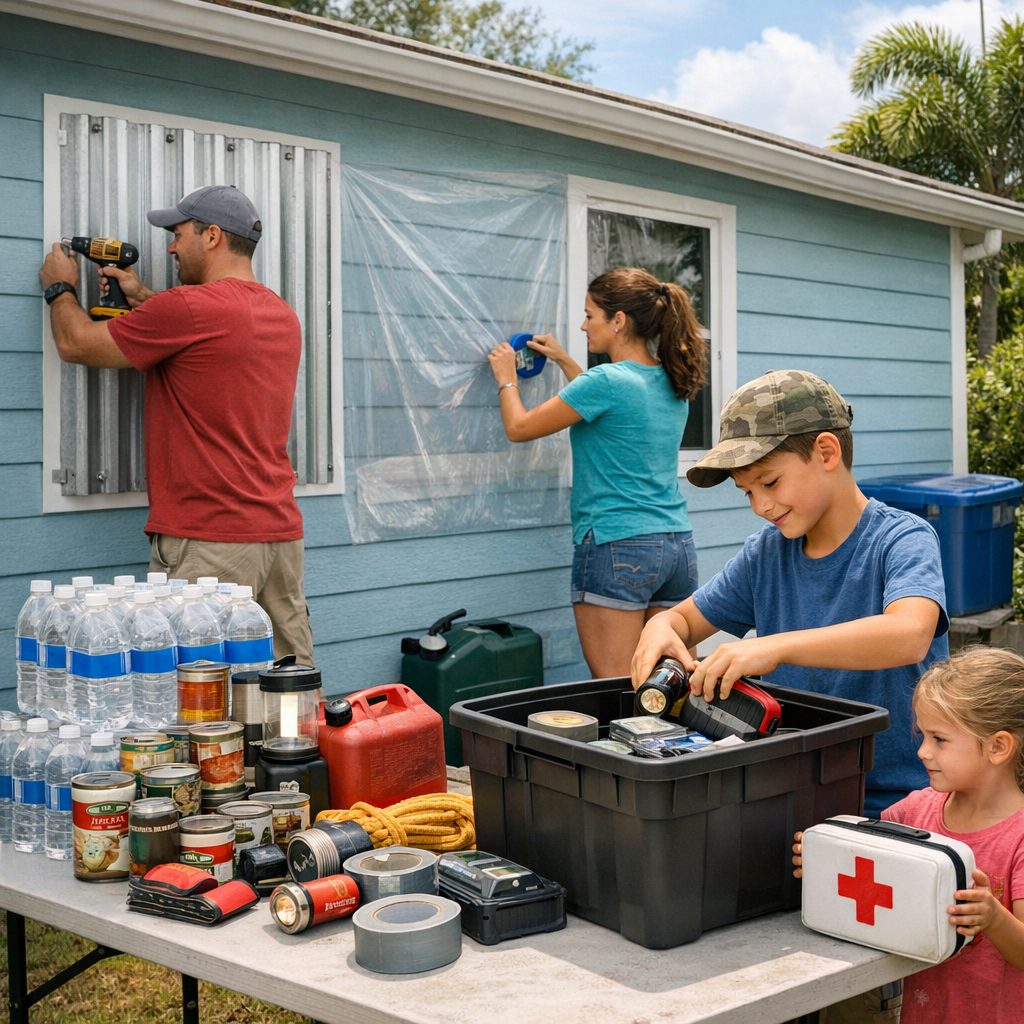
Living in Port St. Lucie means embracing the beauty of Florida’s Treasure Coast, but it also requires readiness for hurricane season, which runs from June 1 to November 30. Proper preparation can significantly reduce risks to life and property.
Understanding Hurricane Season
The Atlantic hurricane season spans six months, with peak activity typically occurring from mid-August through mid-October. On average, the Atlantic basin experiences 14 named storms, seven hurricanes, and three major hurricanes each season.
Developing a Family Emergency Plan
Creating a comprehensive emergency plan is crucial. Discuss with your family how you’ll receive emergency alerts, identify evacuation routes, and establish a communication strategy in case of separation. Designate a family meeting place that’s easy to find and familiar to all members.
Assembling a Hurricane Supply Kit
Prepare a supply kit with essentials to last at least 72 hours. Include:
- One gallon of water per person per day
- Non-perishable food items
- Medications and medical supplies
- Important documents in a waterproof container
- Flashlights with extra batteries
- First aid kit
- Personal hygiene items
- Cash, as ATMs may be inoperable
Securing Your Property
To minimize potential damage:
- Install hurricane shutters or pre-cut plywood to protect windows and doors.
- Trim trees and shrubs to reduce the risk of falling branches.
- Bring in outdoor furniture, decorations, and any items that could become projectiles in high winds.
- Lower the water level in your swimming pool by no more than one foot and add extra chlorine to prevent contamination.
Evacuation Planning
Know your evacuation zone and routes. In Port St. Lucie, areas like Westmoreland Boulevard, Morningside Boulevard, Ballantrae, and Tesoro are prone to flooding. If you live in these areas or in a mobile home, plan to evacuate early. Public shelters are available, but it’s advisable to stay with friends or family if possible.
Staying Informed
Sign up for local emergency notifications through Alert St. Lucie to receive timely updates. Monitor local news stations, NOAA Weather Radio, and the National Hurricane Center for the latest information.
After the Storm
Once the hurricane has passed:
- Wait for official clearance before venturing outside.
- Avoid downed power lines and report them to authorities.
- Do not wade through floodwaters, as they may contain hazardous materials.
- Document any property damage for insurance purposes before beginning cleanup.
- Use generators outdoors only to prevent carbon monoxide poisoning.
By taking these proactive steps, Port St. Lucie residents can better protect themselves and their property during hurricane season. Stay prepared, stay informed, and stay safe.